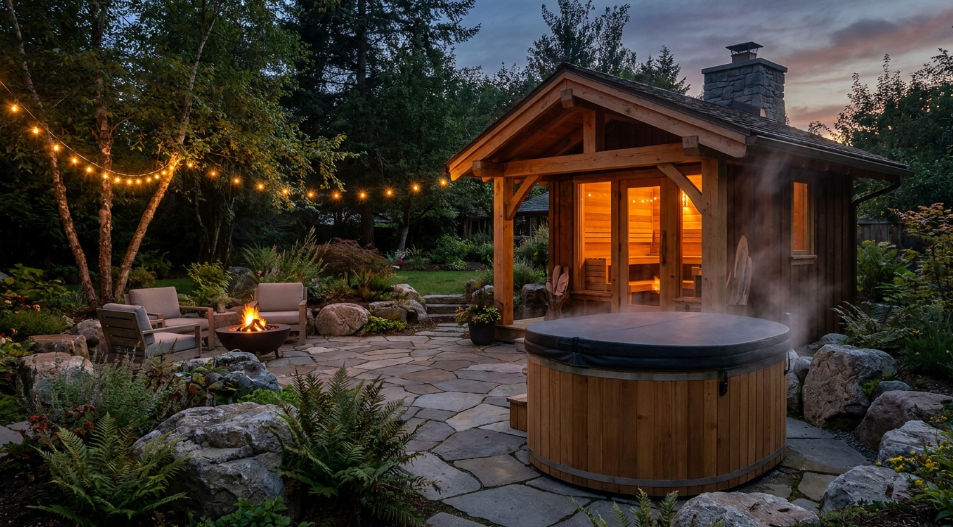
A DIY barrel or cabin sauna kit typically saves $700 to $2,500 over the same unit with professional installation, but it asks for a free weekend or two, a second set of hands, and basic comfort with tools and electrical planning. Professional installation adds that cost back but usually finishes in a single day, including hookup. The right choice comes down to available time, site conditions, and whether the buyer is willing to hire an electrician for the one part of the job that genuinely should not be improvised.
What Does a DIY Sauna Kit Actually Include?
Most flat-pack kits ship as pre-cut wall, roof, and floor panels with hardware, a door and window unit, benches, and sometimes the heater as a separate box. Assembly is closer to building a large piece of furniture than framing a structure from scratch: panels bolt or slide together on a tongue-and-groove system, and the roof typically goes on last. What is rarely included is the pad or deck the sauna sits on, the electrical circuit for the heater, and any interior trim beyond the basics. Buyers who assume “kit” means “everything needed” are usually surprised by that gap once the panels arrive.
How Much Time Does a DIY Install Really Take?
A straightforward two-person assembly on an already-prepared pad runs one full weekend for a small to mid-size cabin, sometimes finishing in a long Saturday if the crew has assembled furniture kits before and reads instructions carefully. Add a second weekend if the site needs grading, a gravel or paver base, or if the roof and window trim are more detailed than a basic model. Electrical work is usually scheduled separately with a licensed electrician, since running a new circuit is not a same-day add-on to a carpentry weekend for most homeowners.
What Skills Does a DIY Install Require?
Comfort with a drill, level, and basic measuring is the floor for entry. Reading a set of assembly instructions carefully and checking each panel is square before moving to the next matters more than raw carpentry experience, since most kits are engineered to fit together with minimal cutting. Where DIY confidence should stop is the electrical circuit: heaters above roughly 6 kilowatts need a dedicated 240-volt line, and wiring that incorrectly is a fire and code risk that is not worth saving a few hundred dollars to avoid hiring an electrician.
When Does Professional Installation Make More Sense?
A sloped or uneven site, a detached location far from the electrical panel, or a buyer without a free weekend or a helper are all good reasons to hire it out. Professional crews also move faster on anything beyond a basic rectangular pad, such as a deck built into an existing patio or a site that needs retaining work first. For anyone assembling a sauna for the first time and unsure how many hours they actually have free, paying for install removes the risk of a half-finished structure sitting under a tarp for a month.
What Does Professional Installation Typically Cost?
Labor for assembly alone usually runs $500 to $1,500 depending on region and cabin size, separate from the electrical work, which adds a few hundred dollars for a short run near the panel or well over $1,000 for a longer trenched run to a detached backyard structure. Buyers comparing installed pricing against DIY savings should get a written quote before ordering, since sauna installers are a smaller trade than general contractors and pricing varies more by region than most home projects. Shoppers pricing out options across the field, including https://sweatdecks.com, will often find installed and kit pricing listed separately, which makes this comparison easier to run before committing to either path.
Does a DIY Install Affect the Sauna’s Warranty?
This varies by manufacturer and is worth checking before assembly starts, not after. Some cabin warranties cover structural defects regardless of who assembled the panels, since a factory flaw in a wall panel is unrelated to installation. Heater warranties are more often tied to proper electrical installation, meaning a heater wired incorrectly, even by a well-meaning homeowner, can void coverage for that specific component. Reading the warranty terms for the heater separately from the cabin terms before deciding on DIY versus professional wiring avoids a situation where a saved $500 in labor costs $1,200 in an uncovered heater replacement two years later.
What Tools Does a Weekend DIY Build Actually Require?
A cordless drill with spare batteries, a 4-foot level, a rubber mallet for seating panels without marring the wood, a tape measure, and a basic socket set cover most kits. A second person is close to mandatory for standing panels upright and holding them square while hardware goes in; attempting a solo build on anything larger than a small cabin usually takes twice as long and risks a panel shifting out of alignment before it’s secured. Renting a table saw or a compressor-driven nailer is rarely necessary for a true kit, since most panels arrive pre-cut, but having one on hand shortens trim work on models with more detailed window or roof framing.
How to Decide Between the Two
Start with the site: if it needs grading, drainage work, or a long electrical run, professional installation earns back more of its cost in avoided mistakes than it does on a flat, close-to-panel lot. Next, be honest about available time. A DIY weekend that stretches into three because of a missed work trip or bad weather erodes the savings fast, especially if the sauna sits half-built and exposed to the elements in the meantime. Buyers who enjoy hands-on projects and have the weekend free tend to be glad they did it themselves; buyers who are buying a sauna specifically to save time on a hobby, not create a new one, are usually happier paying for install.
What Does the Evidence Say About Getting a Sauna Running Sooner?
The health associations tied to sauna use, including a 2018 review in Mayo Clinic Proceedings and a 2001 review in The American Journal of Medicine, are both linked to frequent, regular sessions rather than any particular installation method. A sauna sitting unfinished for an extra month because a DIY weekend ran long is a month of sessions not happening. That is a practical, not medical, reason to weigh installation speed alongside price when the two options are close.
Frequently Asked Questions
Is a DIY sauna kit actually cheaper than professional installation? Yes, usually by $700 to $2,500. The savings come from skipping paid assembly and wiring labor, not from a cheaper sauna, since the kit price is the same either way.
How long does a DIY outdoor sauna install take? Most kits take a weekend to assemble with two people, plus a separate day for electrical work. Larger cabins or sites needing a new pad can stretch to two weekends.
Can a homeowner legally wire a sauna heater themselves? In many areas, yes, for their own residence, though the work still needs to pass inspection. Some jurisdictions require a licensed electrician regardless, so check local rules before ordering.
What is the biggest risk of a DIY sauna install? Getting the foundation or electrical work wrong in a way that is not obvious until months later, such as an undertemping heater or rotting floor panels from poor drainage.
References
- Cardiovascular and Other Health Benefits of Sauna Bathing: A Review of the Evidence, Mayo Clinic Proceedings, 2018
- Benefits and risks of sauna bathing, The American Journal of Medicine, 2001
- Effects of heat and cold on health, with special reference to Finnish sauna bathing, American Journal of Physiology, 2018