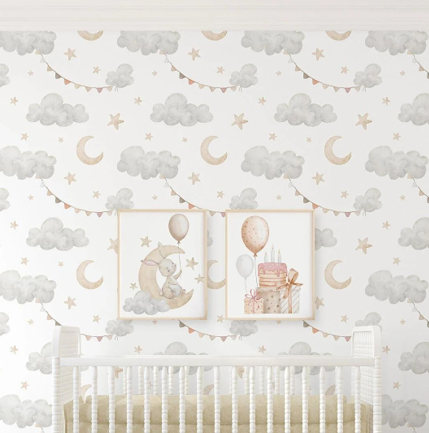
Designing a nursery is about creating a room that feels calm, welcoming, and practical while leaving enough flexibility for the space to change as your child grows. Wallpaper can establish the entire atmosphere of the room, whether you prefer soft neutrals, playful animals, botanical patterns, or imaginative scenes. The right nursery wallpaper can add personality without requiring a large number of decorations, making it an easy starting point for the rest of the interior.
Before choosing a design, consider more than appearance. Color, pattern scale, furniture placement, lighting, and how long you want the design to remain relevant can all influence which wallpaper works best.
Start With the Atmosphere You Want to Create
Before looking at individual patterns, decide how you want the nursery to feel.
Soft beige, cream, sage, dusty blue, muted pink, and warm gray can create a calm background. These colors are also relatively easy to combine with natural wood and neutral furniture.
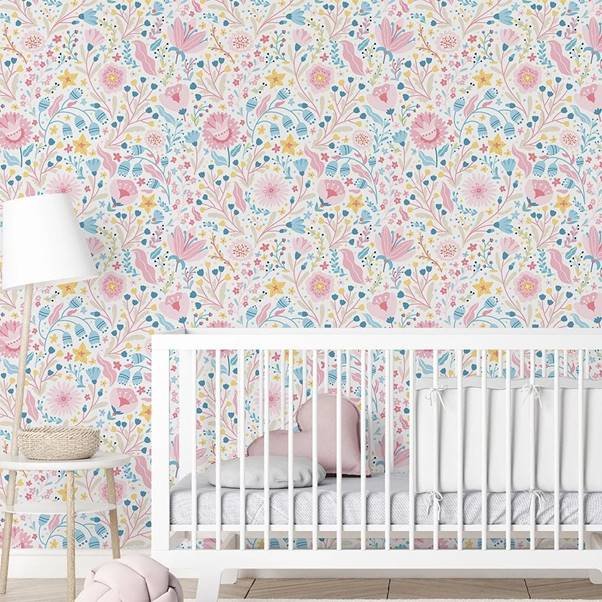
Brighter colors can make the room more playful, but they don’t necessarily need to cover every wall. A colorful wallpaper on one accent wall can provide plenty of personality while the remaining walls stay simple.
For a nursery designed to evolve into a toddler’s room, consider colors that don’t feel overly specific to the baby’s first year.
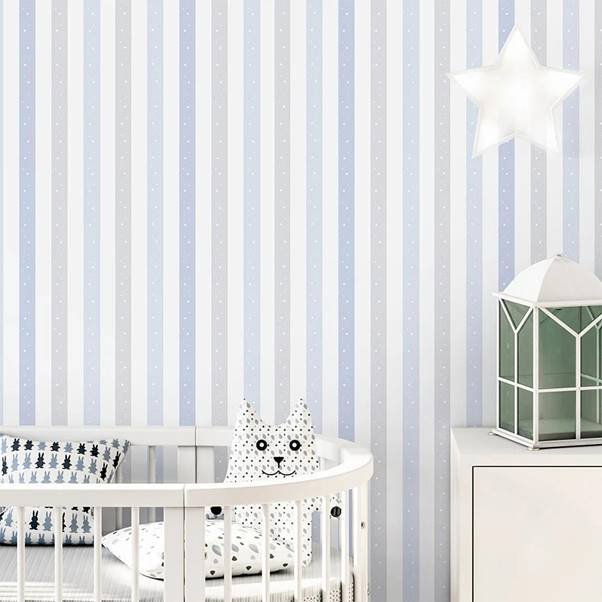
Choose a Theme That Can Grow With Your Child
Nursery themes don’t have to rely on traditional baby motifs. Nature, animals, forests, oceans, stars, clouds, flowers, and abstract patterns can work for several years.
Nature-inspired themes are particularly versatile because they can feel playful without becoming overly childish.
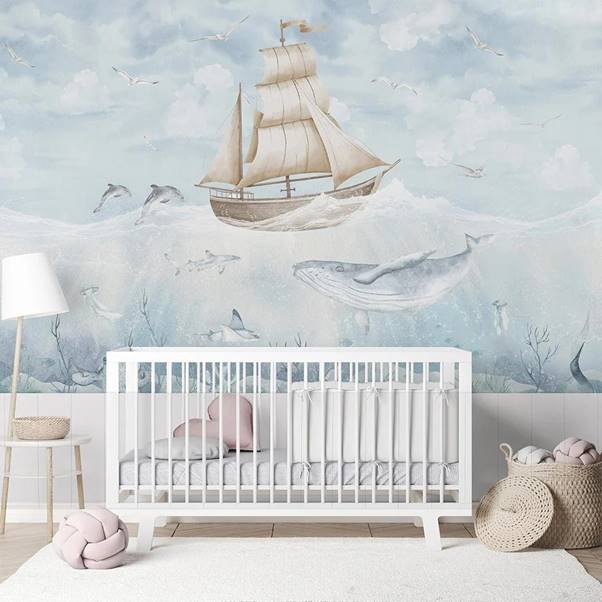
For example, underwater wallpaper can introduce fish, ocean life, water-inspired colors, and imaginative details into the room. The theme works well for a baby’s nursery but can remain appropriate as the child gets older, especially when paired with relatively simple furniture and accessories.
The same principle applies to woodland, botanical, or celestial designs: choose a theme that can evolve through changes in bedding, toys, artwork, and furniture.
Think About Pattern Scale
Pattern scale can completely change how wallpaper feels in a room.
Small repeating motifs usually create a softer, more consistent background. They can work particularly well when wallpapering several walls.
Larger illustrations make a stronger statement and often work best on an accent wall. Oversized animals, flowers, trees, or other scenic elements can become the main decorative feature of the nursery.
Consider the size of the wall as well as the furniture that will stand in front of it. A large design may lose its impact if the most important part disappears behind a crib, dresser, or shelving unit.
Planning furniture placement before selecting the final wallpaper can prevent this problem.
Accent Wall or the Entire Nursery?
Both approaches can work.
An accent wall is a good choice if the wallpaper has a colorful or detailed design. The wall behind the crib is often selected because it creates a natural focal point, although furniture layout should always come first.
Wallpapering all four walls can create a softer, more immersive atmosphere when the pattern is relatively subtle.
Small stars, delicate botanicals, simple animals, or low-contrast geometric patterns are generally easier to use throughout a room than highly detailed scenes.
Another option is to wallpaper part of the wall and combine it with painted sections or wall paneling. This can add visual structure while keeping the pattern from dominating the room.
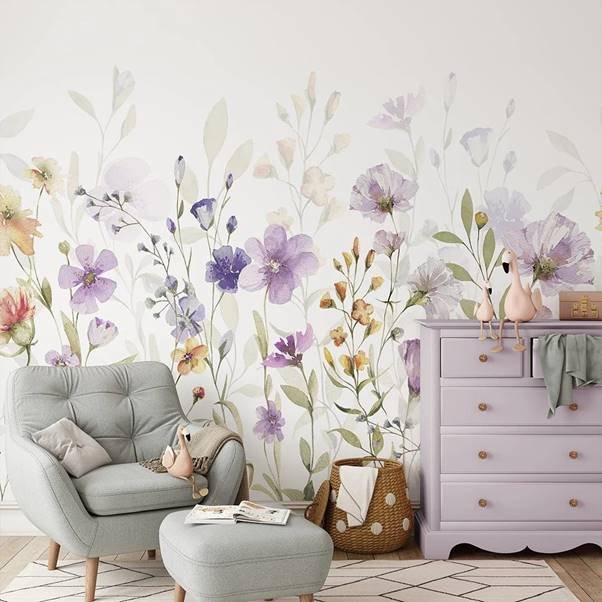
Coordinate Wallpaper With Furniture
The wallpaper doesn’t need to match every piece of furniture exactly.
Instead, choose two or three colors from the design and repeat them subtly throughout the room.
For example, if the wallpaper contains sage green, cream, and warm brown, these shades can appear again through curtains, bedding, a rug, storage baskets, or decorative accessories.
Natural wood is particularly versatile in nurseries because it works with almost every color palette and helps warmer wallpaper designs feel cohesive.
White and cream furniture can provide contrast when the wallpaper is darker or more colorful.
Consider the Room’s Lighting
Wallpaper can look very different depending on the amount and direction of natural light.
Soft colors may appear warmer in strong sunlight, while deeper shades can become significantly darker in a room with limited daylight.
Before making a final decision, consider how the nursery looks at different times of day. This is particularly important because the room will be used both during daylight and under artificial lighting in the evening.
Warm, soft artificial lighting generally complements nursery interiors and can make muted wallpaper colors feel more comfortable.
Keep the Rest of the Room Balanced
When wallpaper already provides plenty of pattern, the nursery doesn’t need many additional decorative elements.
Solid curtains, simple bedding, and a relatively restrained rug can balance a detailed wall.
If the wallpaper is subtle, you have more freedom to introduce patterned textiles, artwork, colorful storage, and decorative accessories.
This approach also makes future updates easier. Instead of redesigning the entire room, you can change smaller items as your child’s interests develop.
Think Beyond the Baby Stage
A nursery changes quickly.
The crib may eventually become a toddler bed, storage needs increase, and toys and books become much more visible.
Choosing wallpaper with some longevity can make these transitions easier.
Rather than selecting a design that works only for a newborn, consider whether the pattern could still suit a three- or five-year-old. Animals, ocean themes, nature, stars, maps, and understated botanical designs often have a longer lifespan than highly specific baby imagery.
The room can then mature through accessories rather than requiring a complete redesign.
Final Thoughts
The best nursery wallpaper combines visual appeal with flexibility. Start with the atmosphere you want to create, consider the scale of the pattern and furniture placement, and choose a theme that can remain relevant beyond the first year.
For more inspiration, explore the nursery and themed wallpaper designs from CostaCover. Comparing different colors and patterns can help you create a room that feels playful and welcoming while still being easy to update as your child grows.