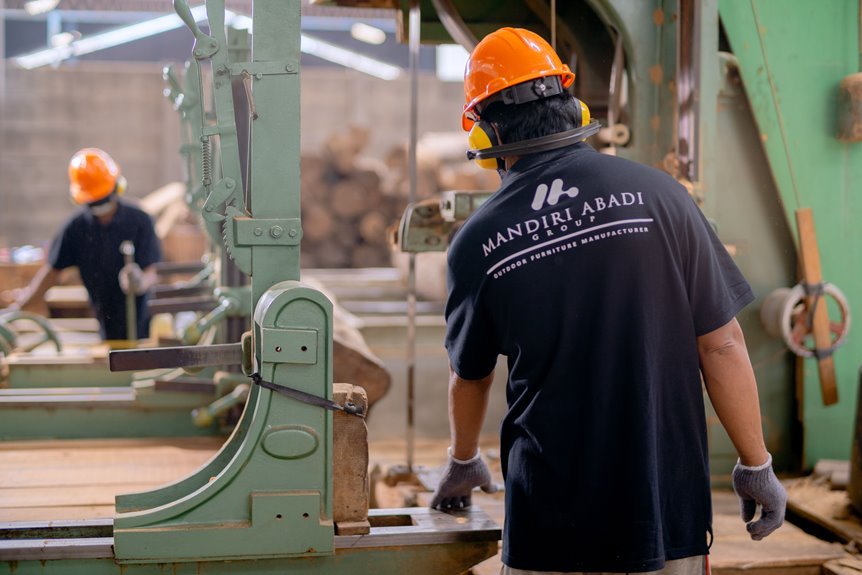
Improving workplace safety in industrial manufacturing requires a structured, data-driven approach. Hazards must be mapped from design onward, with risks prioritized by severity and likelihood. Training should establish clear standards and verifiable competence, aligned with observable performance. Real-time alerts and near-miss reporting enable immediate risk assessment and root-cause analysis. Safer equipment, ergonomic workspaces, and leadership-driven, continuous improvement culture complete the framework. The next step clarifies how these elements integrate in practice and where gaps commonly arise.
Identify and Prioritize Upstream Safety Risks
Identifying and prioritizing upstream safety risks requires a structured, data-driven approach that starts at the design and planning stages.
The process emphasizes risk mapping to visualize exposure pathways and hazard prioritization to rank potential failures by severity and likelihood.
This method yields actionable thresholds, guiding proactive controls, design adjustments, and resource allocation while preserving operational freedom and continuous improvement across manufacturing processes.
Build Bones of Effective Training and Competence
Effective training and competence build a durable foundation for safety by defining clear requirements, standards, and verification at every stage of an operator’s journey.
The approach articulates training standards and maps competency across roles, aligning learning objectives with observable performance.
Systematic assessment, ongoing validation, and documentation enable consistent skill advancement while fostering autonomy, accountability, and proactive safety across the workforce.
Implement Real-Time Communication and Near-Miss Reporting
Real-time communication and near-miss reporting are essential components of a proactive safety culture in industrial manufacturing. Systems must deliver real time alerts promptly, enabling supervisors to assess risk, halt processes if needed, and implement corrective actions without delay.
Near miss reporting should be streamlined, mapped to root cause analysis, and reviewed regularly to prevent recurrence while preserving operational momentum.
Adopt Safer Equipment and Workspace Design
Industrial environments benefit directly from engineering controls that reduce exposure to hazards and streamline operations. Adopting safer equipment and workspace design emphasizes advocation ergonomics, optimizing tool placement, reach, and clearance to minimize strain. Proactive planning enables hazard mitigation through modular layouts, automated feeds, and adjustable stations that adapt to worker needs without compromising efficiency. Regular assessments validate effectiveness and guide iterative improvements.
Create a Culture of Continuous Safety Improvement
A culture of continuous safety improvement emerges from sustained leadership commitment, rigorous measurement, and systematic employee engagement. It operationalizes habitual vigilance through daily checks, near-miss reporting, and transparent feedback loops.
Leaders model accountability, assign clear safety owners, and uphold consistent consequences. Teams participate in iterative learning cycles, share best practices, and quantify progress.
This disciplined cadence sustains safety momentum and protects workforce autonomy and performance.
Frequently Asked Questions
How Do We Measure Long-Term Cost Benefits of Safety Programs?
A comprehensive cost benefit analysis measures adjusted incident costs, productivity changes, and training impact to quantify long term ROI; it tracks lagged savings, safety improvements, and risk reduction, yielding a disciplined framework for durable, freedom-minded decision making.
What Are the Best Methods for Engaging Seasonal or Contract Workers?
48% of injuries occur within first two weeks of employment, illustrating the impact of onboarding. The report focuses on engagement strategies and seasonal onboarding, detailing precise, proactive methods that respect autonomy while ensuring consistent safety engagement for temporary workers.
How Can AI Assist in Predicting and Preventing Incidents?
AI enables incident prediction through data-driven monitoring and risk assessment, allowing proactive interventions. It supports AI risk assessment workflows, identifies patterns, allocates resources, and guides preventive actions, empowering teams with adaptive safety measures and transparent decision-making.
Which Metrics Indicate a True Cultural Shift in Safety?
Measured indicators of true cultural shift in safety include sustained safety leadership engagement and consistent near miss reporting, with reduced lag times, broad employee participation, transparent feedback loops, and documented behavioral changes across teams signaling proactive risk mitigation.
How Should We Handle Conflicting Safety Priorities With Production Goals?
Conflicting safety and production goals are resolved by prioritizing risk-based decisions, cross-functional planning, and clear escalation paths; safeguards first, trade-offs explicit, and flexible scheduling enacted. This approach treats conflicting safety as non-negotiable, yet manageable, with disciplined transparency.
Conclusion
A precise, methodical approach anchors safety in industrial manufacturing, where hazards are mapped upstream, controls are threshold-driven, and competencies are verifiable. By prioritizing risk by severity and likelihood, organizations implement real-time alerts and near-miss reporting to trigger immediate analysis. Safer equipment and ergonomic layouts support proactive performance, while leadership and engaged employees sustain momentum. In this contínuum of improvement, safety becomes a well-tuned machine—steady, transparent, and resilient—keeping people, processes, and production harmoniously aligned.