

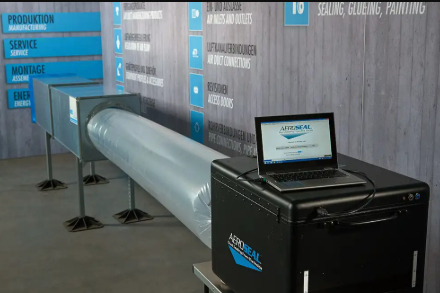
As energy costs continue to rise and building performance standards become stricter, homeowners and commercial property managers across the United States are turning to smarter HVAC solutions. One of the fastest-growing innovations in this space is aerosol duct sealing, a cutting-edge method designed to eliminate hidden air leaks inside ductwork without invasive construction.
Leaky ducts are one of the most overlooked causes of energy waste, poor indoor air quality, and uneven heating and cooling. According to the U.S. Environmental Protection Agency, duct leakage can account for up to 30% of conditioned air loss in typical HVAC systems. This has placed duct sealing technology at the center of energy-efficiency trends for 2025.
What Is Aerosol Duct Sealing?
Aerosol duct sealing is an advanced, non-invasive process that seals air leaks from the inside of HVAC duct systems. Instead of manually taping or insulating ducts, a fine mist of sealant particles is injected into the ductwork. These particles remain airborne until they encounter leaks, where they bond together and permanently seal gaps.
Unlike traditional methods, aerosol-based sealing reaches hidden duct leaks behind walls, ceilings, and floors—areas that are otherwise inaccessible without demolition.
Why Aerosol Duct Sealing Is a Trending HVAC Solution
1. Rising Energy Efficiency Standards
With stricter energy codes and sustainability goals becoming standard across residential and commercial construction, improving HVAC efficiency is no longer optional. Aerosol duct sealing directly reduces air loss, allowing HVAC systems to operate at peak performance with less energy consumption.
This makes the technology especially appealing for buildings aiming to meet energy benchmarks or reduce operational costs.
2. Improved Indoor Air Quality (IAQ)
Indoor air quality is a growing concern, particularly in schools, offices, and healthcare facilities. Leaky ducts can pull dust, insulation fibers, mold spores, and pollutants from unconditioned spaces into living areas.
By sealing ducts from the inside, aerosol duct sealing prevents contaminants from entering the airflow, supporting healthier indoor environments and aligning with modern IAQ improvement strategies recommended by organizations like the EPA.
3. Non-Invasive and Time-Efficient Installation
Traditional duct sealing often requires cutting into walls or ceilings, resulting in higher labor costs and longer project timelines. Aerosol duct sealing eliminates these challenges.
The entire process is typically completed within a few hours, with minimal disruption to occupants. This makes it ideal for both retrofit projects and occupied commercial spaces.
4. HVAC System Longevity
When ducts leak, HVAC systems must work harder to maintain temperature, leading to increased wear and tear. Sealing leaks improves airflow balance and reduces system strain, which can extend equipment lifespan and lower maintenance expenses.
This benefit is driving increased adoption among facility managers focused on long-term cost control.
How Aerosol Duct Sealing Works
The process follows a precise and measurable approach:
- Duct Pressurization – The duct system is temporarily sealed at vents and registers.
- Leak Testing – Advanced diagnostic tools measure total air leakage.
- Sealant Injection – A polymer-based aerosol mist is introduced into the ducts.
- Leak Sealing – Sealant particles accumulate at leak points and permanently seal gaps.
- Post-Sealing Verification – Final testing confirms the reduction in air leakage.
This data-driven method provides measurable performance improvements, a major advantage over traditional sealing techniques.
Applications Across Residential and Commercial Buildings
Aerosol duct sealing is not limited to one building type. Its versatility makes it suitable for:
- Single-family homes and apartments
- Commercial office buildings
- Schools and universities
- Hospitals and healthcare facilities
- Retail and hospitality properties
For older buildings with aging ductwork, aerosol sealing is often the most cost-effective way to achieve modern efficiency standards without full system replacement.
See also: business operations index numbers
Environmental and Sustainability Benefits
Reducing duct leakage directly lowers energy consumption, which in turn reduces greenhouse gas emissions associated with heating and cooling. This aligns with broader sustainability initiatives and green building certifications.
Energy-efficient HVAC upgrades like duct sealing are frequently recommended as a first step before investing in renewable energy solutions, ensuring maximum efficiency across the entire system.
Why Professional Aerosol Duct Sealing Matters
Proper implementation requires specialized equipment, trained technicians, and post-installation verification. Professional services ensure that the sealant is applied evenly, safely, and in compliance with industry standards.
To explore professional solutions and learn more about how this technology works in real-world applications, visit this detailed resource on aerosol duct sealing.
Final Thoughts
As energy efficiency, indoor air quality, and sustainability remain top priorities in 2025, aerosol duct sealing is emerging as a must-have HVAC upgrade. Its ability to seal hidden leaks, reduce energy waste, and improve overall system performance makes it one of the most impactful yet underutilized solutions in the HVAC industry today.
For property owners looking to future-proof their buildings, lower utility costs, and enhance occupant comfort, aerosol duct sealing represents a smart, data-backed investment with immediate and long-term benefits.


![[pii_email_5c44ec74e49a8800170b]](https://fusionpowertech.com/wp-content/uploads/2023/06/images-8-3.jpg)
![[pii_email_54c36cbe8ddd45bdefae]](https://fusionpowertech.com/wp-content/uploads/2023/06/images-2.png)


![[pii_email_bd3a8df463d4a6ebf4ef]](https://fusionpowertech.com/wp-content/uploads/2023/05/images-6.jpg)
