Fundraising for a non-profit is remarkably difficult when your cause is invisible. If you are trying to raise money for carbon capture, groundwater restoration, or complex socioeconomic programs, abstract concepts can feel too distant to donors. Traditional photography and video often fall short because you simply cannot film a process that is microscopic, atmospheric, or theoretical.
That’s where 3D rendering and animation step in. When you trade abstract spreadsheets for vivid, moving visuals, donors don’t just see data; they connect with it. And that connection is what actually moves people to give.
Making the Invisible Visible
Donors want to fix problems they can actually see. If your organization deals with hidden or technical issues, 3D animation brings those challenges directly to light.
- Environmental Impact: You can animate the flow of microplastics through marine ecosystems to map out exact environmental damage.
- Scientific Clarity: You can show carbon capture technology working at a molecular level, pulling particles directly out of the air.
- Health and Sanitation: For health-focused charities, 3D assets can illustrate the immediate impact of clean water inside a human cell, making a biological victory simple to grasp.
When you make abstract data visual, you eliminate confusion. Donors immediately understand the problem, why it matters, and exactly how your team plans to solve it.
Building Emotional Connection Without Trauma
Some non-profit work involves incredibly sensitive, heavy, or traumatic topics. Live-action footage of real people experiencing crisis can sometimes feel exploitative, or worse, it can cause audiences to look away because the imagery is too painful to process.
Stylized 3D animation sidesteps this problem. It lets you tell character-driven stories that build genuine empathy without crossing the line into traumatic imagery. The animation creates a respectful buffer, keeping eyes on the mission rather than the shock factor.
Additionally, creating a distinct animated character or brand mascot helps with long-term retention. Donors will remember your organization and associate that visual figure with your cause long after the specific fundraising campaign ends.
Visualizing Future Impact and Earning Trust
Most donors hesitate because they cannot see the final result of their contribution before making it. They worry their funds will vanish into an administrative black hole. 3D tools allow you to show them the future before it is even built.
You can animate a local community to show exactly what a new school, farm, or medical clinic will look like once construction finishes. You can also recreate past success stories visually to prove your strategy works in the real world. By building clear, animated maps that trace the path of global aid distribution, you show exactly where a donor’s money goes, converting skepticism into absolute trust.
See also: Revolutionizing cargo inspections with advanced scanning tech
Driving Donations Across Multiple Platforms
Once your 3D assets are built, you can easily repurpose them across all your fundraising channels to maximize your initial investment.
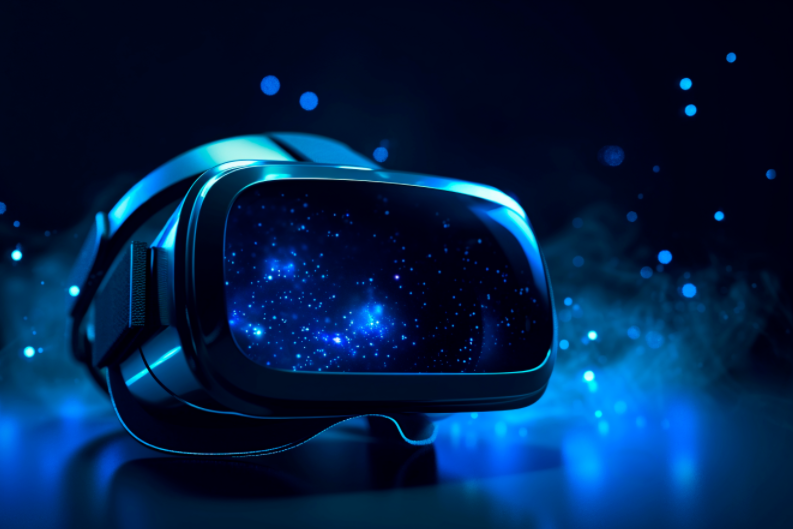
Short, high-energy 3D loops work incredibly well for social media donation drives, grabbing attention in crowded feeds much faster than static text or basic photos. For high-net-worth fundraising galas, you can use VR or immersive 3D projections to make major donors feel like they are standing directly at your project site. You can also ditch the text-heavy annual reports. Replacing them with animated data visualizations turns dry spreadsheets into a narrative that actually proves your fiscal responsibility.