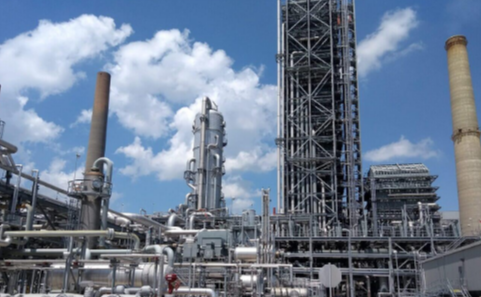
In the global effort to reduce greenhouse gas emissions, carbon capture technology has become a central piece of the puzzle. Traditionally, large-scale carbon capture facilities dominated the conversation—massive installations attached to power plants or industrial complexes that can capture tons of CO₂. Recently, however, smaller carbon capture solutions are gaining attention across industries, researchers, and even communities looking to take action on climate change. These compact systems are proving that flexibility, accessibility, and cost-effectiveness can drive meaningful environmental impact.
The Shift Toward Modular and Flexible Technology
One of the key reasons smaller carbon capture solutions are gaining traction is their modular nature. Unlike giant systems that require extensive infrastructure and long lead times, modular units can be deployed more quickly and easily. Organizations are increasingly drawn to options like a compact carbon capture system that can be tailored to specific needs.
Modularity means these units can be scaled up incrementally as demand grows, or moved from one site to another without substantial reconstruction. This flexibility opens up carbon capture to facilities that would otherwise be locked out because of cost, space, or operational constraints.
Lower Upfront Costs and Financial Accessibility
Traditional carbon capture systems come with significant capital expenditures. For many mid-sized facilities or businesses in hard-to-abate sectors, these costs can be prohibitive. Smaller solutions, by contrast, often require less upfront investment. That makes carbon capture more financially accessible to a broader range of companies.
Lower costs also mean a shorter payback period. When a business can implement a smaller capture unit without taking on heavy debt or sacrificing other investments, the economics of carbon reduction become much more appealing. This is especially important for small and medium-sized enterprises (SMEs) that want to act on sustainability but don’t have the budget of multinational corporations.
Enabling Decentralized Emissions Reductions
Another benefit of compact carbon capture systems is their role in decentralizing emissions reduction. Large carbon capture facilities are tied to major emission sources, like steel mills or fossil-fuel power stations. But many emissions come from smaller sources distributed across sectors like manufacturing, cement production, or even remote facilities.
Deploying smaller units closer to where emissions are generated can significantly reduce transportation needs and associated emissions. It also empowers local operators to take responsibility for their carbon output, contributing to broader climate goals while maintaining operational independence.
Innovation and Cross-Sector Collaboration
Smaller carbon capture solutions are also spurring innovation. Their diverse applications—ranging from industrial sites to onboard capture for transport fleets—are encouraging cross-sector collaboration. Engineers, researchers, and sustainability leaders are working together to improve efficiency and explore novel materials that enhance capture performance.
This collaborative environment accelerates improvements and drives down costs even further over time. As more organizations pilot and adopt smaller units, the learning curve speeds up, making these solutions even more attractive to the market.
Bridging the Gap Toward a Net-Zero Future
While large-scale carbon capture will continue to play a crucial role in tackling climate change, smaller solutions are filling critical gaps. They offer a way for more organizations to participate in carbon reduction efforts today, rather than waiting for major infrastructure projects to be completed.
By making carbon capture more accessible, flexible, and financially feasible, compact systems are helping to democratize climate action. As the world works toward net-zero emissions, these nimble technologies will likely remain at the forefront of practical and scalable solutions.
Smaller carbon capture isn’t just a trend—it’s a strategic approach to real-world decarbonization that empowers businesses of all sizes to contribute to a cleaner, more sustainable future.


![[pii_email_4b8fa8b8e14f953a10cc]](https://fusionpowertech.com/wp-content/uploads/2023/06/images-29.jpg)
![[pii_email_7bfe48e5c60a47d5ad6a]](https://fusionpowertech.com/wp-content/uploads/2023/06/images-11.jpg)